


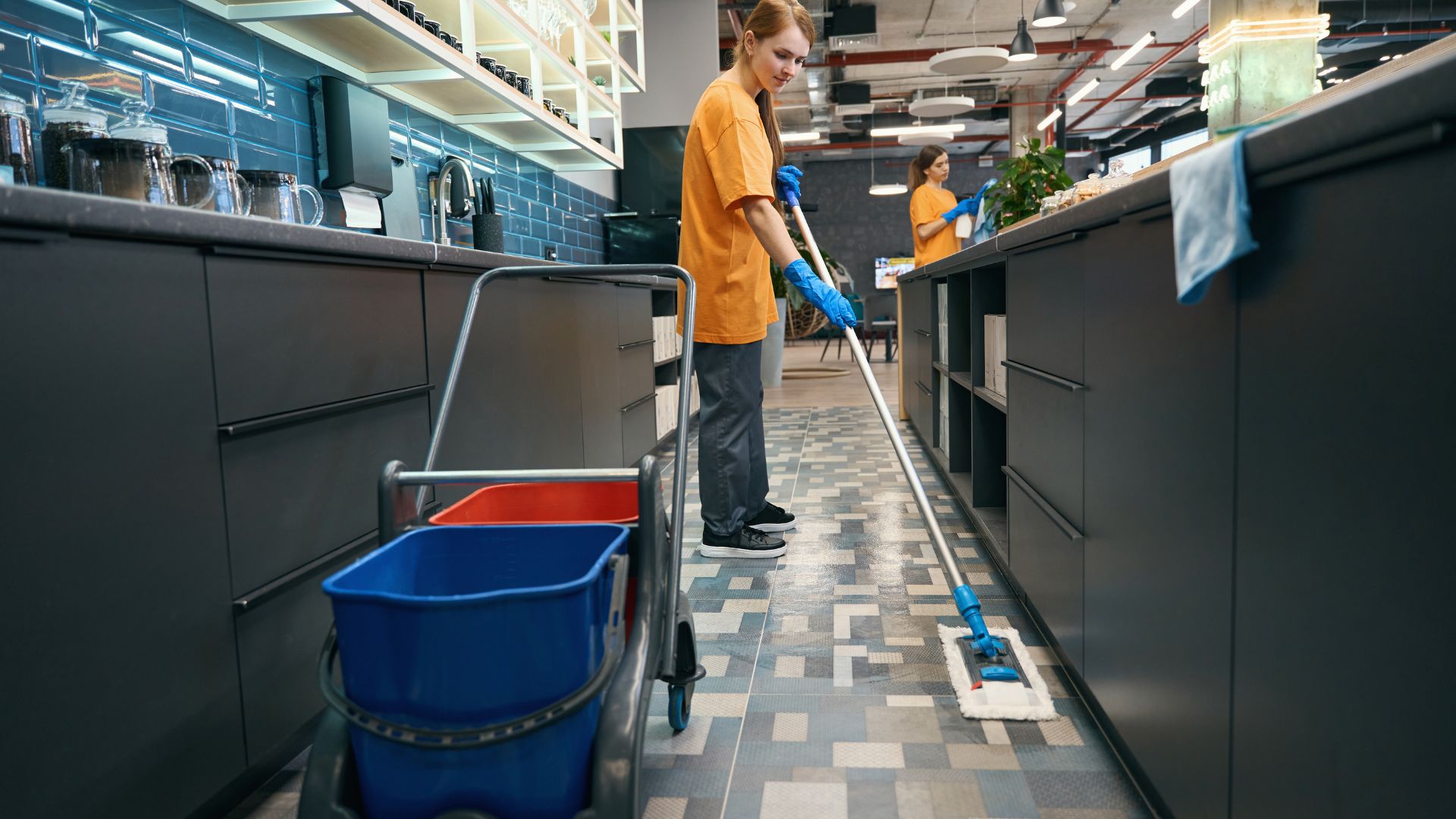
There is no single cleaning schedule that fits every commercial space. A small office with limited visitors does not operate like a school hallway between classes or a gym during the evening rush.
The right schedule begins with how people use the building. Facility managers should review traffic, shared surfaces, room purpose, operating hours, floor materials, and any rules that apply to their organization.
This review also makes cleaning estimates easier to compare because each company is pricing the same expectations.
Begin With Traffic and Use
Walk through the building during a typical busy period. Note where people enter, wait, eat, change clothes, share equipment, and dispose of waste.
A space that looks quiet during an early-morning estimate may have very different needs at noon or after work.
Ask these questions:
- How many people use the facility on a typical day?
- Which rooms receive the most traffic?
- Which surfaces are touched repeatedly?
- When can cleaning occur without interrupting operations?
- Which tasks must follow facility-specific rules?
The answers help determine which areas need attention on every service day and which can follow a weekly or periodic schedule.
Separate Cleaning From Disinfecting
Cleaning removes dirt and many germs from surfaces. Disinfecting uses an appropriate product to kill remaining germs when needed. The tasks are related, but they are not interchangeable.
The CDC’s facility-cleaning guidance recommends regularly cleaning high-touch surfaces. Additional disinfection may be appropriate in certain circumstances, including illness or an outbreak identified by public health authorities.
Product directions, required contact time, and surface compatibility matter. Schools, childcare facilities, healthcare environments, food areas, and other regulated spaces may also have additional requirements.
Create Zones With Different Frequencies
A practical commercial plan groups tasks by zone. The following examples provide a starting point for an estimate rather than a universal schedule.
Entrances and Reception Areas
Inspect these areas on every service day because they collect tracked-in debris and influence a visitor’s first impression.
Floors, mats, glass, door hardware, counters, and waste bins may require different frequencies depending on traffic and weather.
Restrooms and Break Areas
These rooms generally need attention on every service day. A high-traffic facility may require additional checks during operating hours.
The cleaning scope should identify who handles consumable supplies, spills, waste, fixtures, floors, and frequently touched surfaces.
Desks Classrooms and Shared Equipment
Decide who clears personal items and which surfaces the cleaning team is authorized to touch.
In schools and gyms, shared equipment may need attention between uses under the facility’s own policy. In offices, individual workstations may follow a rotating schedule while shared meeting rooms receive more frequent service.
Floors
Match the cleaning method to the floor material and level of traffic. An entrance may require service more frequently than a private office.
Periodic work should include carpet edges, corners, and areas beneath movable furniture so the routine does not cover only open walkways.
Fixtures Vents and Baseboards
These details may not need attention on every visit, but they should not disappear from the plan. Add them to a monthly, quarterly, or condition-based rotation.
The correct interval depends on the building, its traffic, and its maintenance needs.
Adjust the Plan for the Facility
Offices
Office schedules usually revolve around entrances, restrooms, break rooms, meeting rooms, desks, waste, and floors.
Visitor volume, hybrid work patterns, and after-hours access may change the required frequency. A written plan should distinguish tasks completed on every visit from tasks handled on rotation.
Schools
Schools experience concentrated traffic and frequent use of shared rooms. Cleaning plans should account for classrooms, restrooms, corridors, common areas, and any requirements established by the school or local authority.
The scope should also clarify whether the provider handles daytime response, after-hours cleaning, or both.
Gyms
Gyms combine heavy foot traffic with shared equipment, mirrors, floors, restrooms, and changing areas. Peak operating hours are an important factor.
The facility should clearly divide responsibilities between its employees and the cleaning provider, particularly for equipment that members or staff clean between uses.
Put the Scope in Writing
Before comparing proposals, prepare a written scope that lists:
- Rooms and areas
- Required tasks
- Service frequency
- Preferred service hours
- Access instructions
- Supply responsibilities
- Excluded or optional work
- Process for reporting concerns
This prevents a common mismatch in which one proposal looks less expensive simply because it covers fewer tasks. A written scope also gives the cleaning team a consistent reference when building a recurring routine.
Request a Schedule Based on Your Space
Rose Magic Cleaning lists commercial cleaning for offices, schools, gyms, retail spaces, and other business properties. The company also offers flexible scheduling and free estimates.
To discuss your building’s traffic, hours, rooms, and priorities, request a commercial cleaning estimate or call 571-559-6135.
Confirm service availability for your address and communicate any facility-specific requirements during the estimate.
Frequently Asked Questions
Does every commercial space need daily cleaning?
No. Frequency depends on traffic, room use, operating hours, waste, floor materials, shared surfaces, and applicable rules. Some zones may need attention every service day, while others can follow a weekly or periodic rotation.
Is disinfecting required every time a surface is cleaned?
Not necessarily. Cleaning and disinfecting are different tasks. The CDC recommends regular cleaning of high-touch surfaces and additional disinfection in certain situations. Always follow product labels and facility-specific requirements.
What should a commercial cleaning estimate include?
The estimate should identify the rooms, tasks, frequency, service hours, supplies, access needs, exclusions, optional services, and process for reporting concerns. A written scope makes competing proposals easier to compare.